
Xinye Fungicide
Best Choice To Slove Fungal Diseases
In Plants & Crops
We offer a full range of fungicide products,
from 30% aqueous solution to high-content granules,
to meet the precise needs of different crops and environments.
Fungal Disease Of Crops
Coping with ubiquitous fungal problems
Wheat Field
Core Fungal Disease:
Wheat rust (stripe rust, leaf rust, stem rust),wheat powdery mildew
Recommended Fungicides Formulations:
50% Carbendazim WG ,500g/L Carbendazim SC,25% Carbendazim WP
Rice Paddy
Core Fungal Disease:
Rice blast, sheath blight, rice false smut, rice bakanae disease, rice leaf spot
Recommended Fungicides Formulations:
75% Chlorothalonil WP,75% Chlorothalonil WG,40% Chlorothalonil SC
Tomato Orchard
Core Fungal Disease:
Tomato gray mold, tomato leaf mold, tomato sclerotinia stem rot, anthracnose
Recommended Fungicides Formulations:
20% Chlorothalonil FU,75% Chlorothalonil WG,50% Carbendazim SC
Cucumber Garden
Core Fungal Disease:
Fusarium wilt (vine rot), leaf spot (brown spot, black spot), powdery mildew
Recommended Fungicides Formulations:
50% Carbendazim WP,720g/L Chlorothalonil SC,65% Mancozeb+15% Carbendazim WP
Our Fungicides Product
The fungicide works by irreversibly inhibiting the activity of this enzyme, blocking glycolysis and energy metabolism, and ultimately inhibiting mycelial growth and spore germination, leading to the death of the fungus.
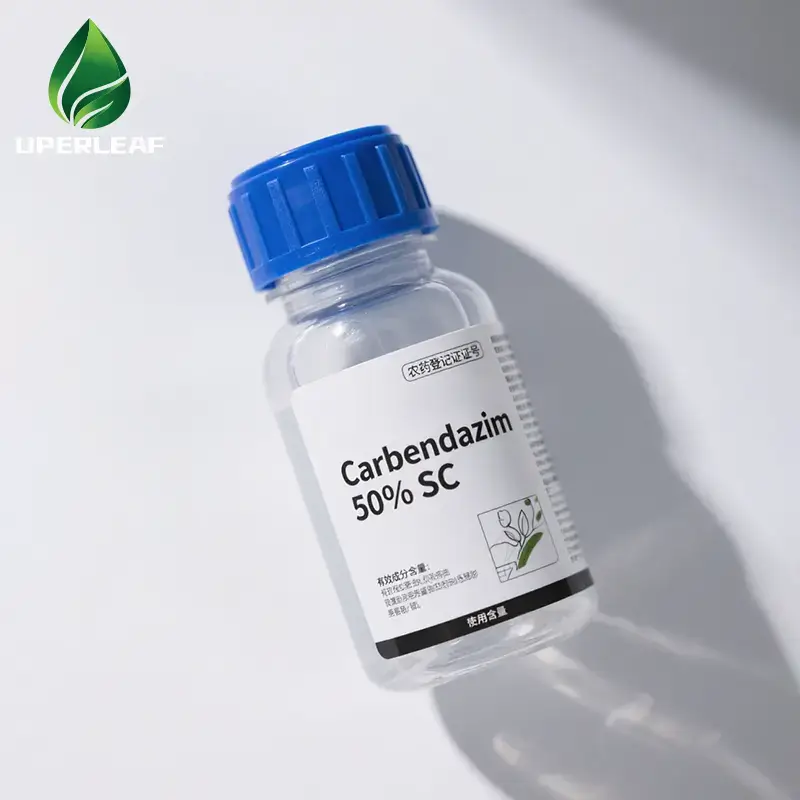
50% Carbendazim SC

75% Chlorothalonil WG

50% Carbendazim WP

75% Chlorothalonil WP

98% Chlorothalonil TC
98% Carbendazim TC

2,6 – Dichlorotoluene

o-Phenylenediamine
Why Choose Our Fungicides?
Four reasons to cooperate with XINYE

Full range of products
We offer a wide range of salt types and dosage forms from one source to meet all your needs.

Strict quality control
Quality is controlled from the source, product purity is stable, and potency is guaranteed.

Customized services
Support OEM/ODM, provide customized formula and packaging services.

Export Expert
Proficient in pesticide regulations to ensure smooth customs clearance of products.
Applications and Cases
Global practice, visible results
Client:
A large agricultural input distributor in Hanoi, Vietnam
Problem:
The company mainly imports 41% glyphosate isopropylamine salt solution (SL) from China. However, the large size and heavy weight of the solution lead to extremely high international logistics costs. In addition, the glass bottle packaging is easily damaged, and the cargo damage rate has remained at around 2% for a long time, seriously eroding profits.
Solution:
Our company recommended [75.7% Glyphosate Ammonium Soluble Granules (SG)]. This product, with its high active ingredient content, is packaged in 25kg woven bags. Compared to aqueous solutions, it reduces volume and weight by over 40% for a comparable shipment, significantly reducing the cost of a single container shipment. Furthermore, the granules are dust-free and leak-free, reducing the risk of cargo damage to virtually zero.
35%The customer’s shipping cost per container was reduced by 35% |
|

Client:
A 5,000-hectare soybean and corn farm in the Argentine Pampas
Problem:
The local temperature is low in early spring, and the glyphosate isopropylamine saline solution used by customers often crystallizes and solidifies at low temperatures, causing blockage of the nozzles, inconvenience in adding the medicine, and unstable efficacy, which seriously affects the efficiency of weeding operations before no-till sowing.
Solution:
Based on the climate, we recommended 30% ammonium glyphosate in saline (SL). This ammonium salt formulation offers significantly better low-temperature stability than traditional isopropylamine salts, resists crystallization, and mixes easily, ensuring rapid and uniform application even in low-temperature conditions.
25%The low-temperature crystallization problem has been solved, and the efficiency of weed control has been increased by 25%, ensuring the optimal window period for sowing. |
|
Glyphosate itself is a single chemical substance (N-(phosphonomethyl)glycine), but its salt forms are classified into the following categories. Different salt forms of glyphosate vary in solubility, stability, and plant absorption efficiency.
1. Isopropylamine Salt (IPA)
Features: This is the most common and traditional glyphosate salt, offering good water solubility and low cost.
2. Ammonium Salt
Features: It has better water solubility than isopropylamine salt, is less likely to react with calcium and magnesium ions in hard water, and exhibits greater stability.
3. Potassium Salt
Features: It generally has higher plant absorption and transport efficiency, offers faster herbicidal efficacy, and is less affected by water quality.
4. Dimethylamine Salt (DMA)
Features: This is also a common salt form, with similar properties to isopropylamine salt.
Technical materials must be processed into various formulations before use. Different formulations are designed to improve efficacy, safety, and convenience.
1. Soluble Concentrate (SL)
Description: Glyphosate salt dissolved in water forms a homogeneous liquid, which can be diluted directly with water upon use.
Advantages: Simple processing, low cost, and currently the most common formulation.
Disadvantages: Not resistant to rainwater washout, and efficacy is easily affected by water quality.
2. Soluble Granule (SG)
Description: Granulated and dissolves quickly in water upon use.
Advantages: Easier packaging, transportation, and metering, no packaging waste, and environmentally friendly.
Disadvantages: Relatively high production costs.
3. Mixed Formulations
Description: Often used in combination with other herbicides to broaden the herbicide spectrum, improve rapidity of action, or address resistance.
Common Combinations:
Glyphosate + 2,4-D: Used to control a wider range of broadleaf weeds and shrubs. Glyphosate + dicamba: Enhances control of perennial broadleaf weeds.
Glyphosate + quizalofop-p-ethyl: Improves control of grass weeds.
Glyphosate is a non-selective herbicide, meaning it kills all green plants it comes into contact with. Therefore, it cannot be used directly for weed control in the field during the crop growth period. Its main applications are as follows:
1. No-till/Minimum Tillage Planting
Usage: Before sowing or transplanting, spray glyphosate to remove all existing weeds in the field, creating a “clean” seedbed for crop growth without the need for tillage.
2. Genetically Modified Glyphosate-Resistant Crops
Usage: When planting genetically modified crops such as glyphosate-resistant soybeans, corn, cotton, and rapeseed, glyphosate can be sprayed directly during the growing season of these crops to kill weeds without harming the crops.
Note: This technology is only approved in China for use as processing raw materials for genetically modified glyphosate-resistant soybeans and corn. Illegal cultivation is strictly prohibited.
3. Targeted Inter-row Spraying
How to Use: In fields with tall crops, such as orchards, tea plantations, and rubber plantations, use a hooded sprayer. Lower the nozzle and spray only between rows and plants to target weeds. Be sure to avoid spraying onto green branches, leaves, or trunks. This requires high skill and carries significant risk.
4. Defoliation
How to Use: Before harvesting crops (such as cotton), spray glyphosate to promote leaf drying and shedding, facilitating mechanical harvesting.
Safety is the primary principle when using pesticides. Improper use of glyphosate can pose risks to humans and the environment.
1. Personal Protection
When preparing and spraying, protective clothing, masks, goggles, rubber gloves, and rubber shoes must be worn.
Smoking, eating, and drinking are strictly prohibited.
Wash hands and exposed skin thoroughly with soap immediately after applying the pesticide.
2. Environmental Safety
Prevent drift: Apply pesticides in calm or light winds and use low-drift spray nozzles to prevent the spray from drifting onto sensitive crops, gardens, or water nearby.
Protect water sources: Prepare pesticides and wash equipment away from water sources such as rivers, ponds, and wells to prevent water contamination.
Protect the environment: Avoid applying pesticides during flowering to avoid impacts on pollinators such as bees. Do not use near aquaculture areas.
3. Application Standards
Precise application: Strictly follow the recommended crop, target, dosage, and application period on the label. Do not increase the dosage arbitrarily. Proper dilution: Use the “double dilution method” to ensure a uniform solution.
Equipment Cleaning: Thoroughly rinse the sprayer after application. Do not pour rinse water into water sources or drains.
4. Storage and Disposal
Store the original packaging in a cool, dry, well-ventilated place, away from children, food, feed, and sources of ignition.
Dispose of empty packaging properly. Reuse is strictly prohibited. Clean, flatten, and bury the packaging in a centralized location or hand it over to a designated facility for disposal.
5. Pre-harvest Interval
When using the spray before sowing crops, wait a certain period (usually 3-7 days, depending on dosage and weather) before sowing to prevent affecting seed germination and seedling growth.