
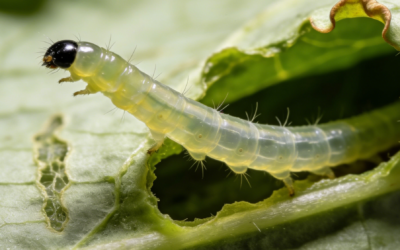
You’ve spent weeks caring for your vegetable garden. Then one morning, you find caterpillars destroying your tomatoes and greens. Hungry pests eating your hard work? There’s a solution that professional growers trust.
Chlorantraniliprole insecticides give you powerful caterpillar control for vegetables. They’re part of the diamide insecticide group. These products keep beneficial insects and pollinators safe.
Older chemical options harm your entire garden ecosystem. Chlorantraniliprole works differently. You can apply it as a foliar spray or soil drench. Both methods work through the plant system. This gives you weeks of protection. Your harvest quality stays high.
I’ve tested dozens of products in real garden conditions. Here are the five best chlorantraniliprole formulations for home gardeners. You’ll get honest pros and cons. I’ll share exact application guidelines. Plus, you’ll learn the critical pre-harvest interval information you need before your next spray.

Chlorantraniliprole sits in IRAC Group 28. It’s a ryanodine receptor modulator from the diamide group. This classification shows you how this diamide insecticide differs from traditional pest control products.
How the Rynaxypyr Active Ingredient Works
The rynaxypyr active ingredient targets specific spots in insect muscle cells. Pests eat treated plants or touch the spray residue. The compound activates their ryanodine receptors. This causes calcium ions to flood muscle cells without control.
Feeding stops within 2-6 hours. The caterpillars lose mobility. Paralysis starts. Death comes within days. Damaged leaves stop growing right after you apply it.
What Pests Does It Control?
This systemic insecticide for plants tackles many vegetable garden pests:
-
Lepidopteran larvae (moth and caterpillars from butterflies)
-
Tomato hornworms, cabbage loopers, armyworms
-
Beetles and their white grub larvae
-
Aphids and true bugs
-
Kills all life stages: eggs, larvae, and pupae
The caterpillar control vegetables formula kills through eating and contact. Pests that crawl across treated surfaces pick up deadly doses.
Protection Duration You Can Count On
Protection lasts 2-3 weeks in vegetable crops. Field data shows strong results:
-
96.1% reduction in whitehead formation after 20 days
-
98.7% control of insect-damaged plants
The compound stays active for 16 days in soil (even at double the label rate). It breaks down in less than one day in water. Rice straw residues decay within 3.5 days.
This long protection cuts down spray applications. You save time. You also limit contact with chemical treatments through your growing season.

1. Coragen Insecticide
FMC’s Coragen leads the chlorantraniliprole market. It has a proven track record in both commercial farms and home vegetable gardens. This foliar spray insecticide uses the rynaxypyr active ingredient at 18.5% w/w concentration. The formula comes as a smooth suspension concentrate.
What Makes Coragen Stand Out
The 200 g/L chlorantraniliprole mix gives you professional-grade caterpillar control for your vegetables. Pests stop feeding within minutes of contact. They become fully paralyzed within hours. Crop damage stops right after you spray.
Key pest targets include:
-
Main caterpillar larvae: Armyworms, corn earworm, diamondback moth, leafrollers, cutworms, corn borers, rice stem borers
-
Leaf miners and borers: Many species across different crops
-
Also controls: Colorado potato beetle adults, silverleaf whitefly nymphs
The Group 28 action mode kills pests that resist older chemicals like organophosphates, pyrethroids, and carbamates. You get results where old products fail.
Approved Vegetable Crops
Coragen works on many vegetable types:
Root and tuber vegetables – potato, sweet potato, radish, turnip, yam, cassava
Fruiting vegetables – tomato, pepper, eggplant
Brassicas – cabbage and related crops
Legumes and cucurbits – okra, bitter gourd, beans (snap, adzuki, mung), gherkin, gourds, muskmelon
Field crops – field corn, sweet corn, popcorn
Greenhouse pepper growers use this systemic insecticide for plants to protect crops in enclosed spaces.
Protection Duration and How to Apply
Field trials show 21 days of pest control with foliar sprays at label rates. Drip irrigation gives even longer protection. The product moves through leaf tissue. One spray protects both top and bottom leaf surfaces.
This long-lasting control changes your spray schedule. You spray every two to four weeks instead of every week. Labor costs go down. You use less chemical overall.
Safety Profile for Beneficial Insects
Lab tests show rat 90-day oral NOEL values between 1,188-1,526 mg/kg. This means very low toxicity to mammals. Plus, Coragen keeps beneficial insects alive – a key benefit for integrated pest management.
Parasitoid wasps, predatory beetles, and lacewings survive in treated areas. Honeybees and native pollinators stay safe with proper use. This beneficial insect safe profile helps you manage pest resistance in a sustainable way.
The formula has preservatives (1,2-benzisothiazolin-3-one at 0.019%) to keep the product stable during storage.
2. Altacor Insecticide
DuPont’s Altacor contains chlorantraniliprole at 35% w/w water dispersible granule strength. You need less product per use than liquid types. The granules dissolve fast in water. You get an even spray mix. No clogs.
Concentrated Formula Benefits
The rynaxypyr active ingredient hits pro-grade levels. This diamide insecticide stops caterpillars from eating within minutes. Pests get slow right away. Total paralysis happens in 2-4 hours.
Primary targets in vegetable gardens:
-
Leafrollers and leafminers – Surface feeders and tunnel-digging larvae
-
Armyworms and cutworms – Ground and leaf pests
-
Tomato pinworm (Tuta absoluta) – A damaging pest that ruins whole crops
-
Fruit borers – Oriental fruit moth and peach twig borer included
-
Codling moth – Shows up in fruiting vegetables
This works great as a foliar spray insecticide. Pests bite a few times. Feeding stops. Crop damage ends there.
Approved Vegetable Applications
Altacor works on over 100 crops around the globe. Vegetable growers can use it on:
Brassicas – cabbage and similar vegetables
Solanaceous crops – tomato, eggplant (brinjal)
Legumes – okra and bean types
Cucurbits – bitter gourd and related plants
Leafy greens – Many types hit by caterpillar damage
This wide approval means one trusted product for varied garden crops.
Safety Considerations for Home Gardens
Altacor is safe for mammals. Acute oral LD50 in rats tops 5,000 mg/kg. For honeybees, oral LD50 is >104.1 µg/bee at 48 hours. Safe for beneficial insects on label use.
Critical aquatic toxicity warning: LC50 values for water life like Ceriodaphnia dubia are 0.0067-0.011 mg/L at 48 hours. Very toxic to aquatic life. Effects last long. Never spray near ponds, streams, or ditches. Stop all drift and runoff.
The product breaks down slowly but doesn’t build up in tissues. Contains milk allergen. People with dairy issues should note this before handling.
3. Cover Liq Insecticide
Cover Liq uses the same rynaxypyr active ingredient as Coragen. Different manufacturers make it for various markets. The 18.5% w/w suspension concentrate formula meets professional standards. This anthranilic diamide insecticide chemistry works across multiple continents.
Broad-Spectrum Caterpillar Control
This systemic insecticide for plants handles a wide pest range. The formula activates ryanodine receptors. Pests stop feeding within hours:
Crucifer pests – Diamondback moth (Plutella xylostella) damages cabbage crops
Fruit and shoot borers – Helicoverpa armigera, Spodoptera litura, Spodoptera exigua, and brinjal shoot/fruit borer (Leucinodes orbonalis)
Stem borers – Rice yellow stem borer, maize spotted stem borer, and pink stem borer
Leaf folders – Cnaphalocrocis medinalis in rice paddies
Cotton bollworms – American bollworm and spotted bollworm (Earias vittella)
Legume pod borers – Multiple Helicoverpa, Maruca, and Spodoptera species
Specialty pests – Sugarcane termites, shoot borers, soybean girdle beetles, pod beetles (Melanagromyza obtusa), and fall armyworm
Cover Liq works great as your foliar spray insecticide for mixed vegetable gardens.
Precise Dosing for Different Vegetables
Application rates change based on crop type and pest pressure. Here’s your quick guide:
Light infestations – Cabbage needs 20 ml/acre (0.1 ml/L) for diamondback moth. Wait 3-11 days before harvest.
Moderate pressure – Bitter gourd and black gram use 40-50 ml/acre against fruit borers
Heavy infestations – Tomato, chilli, and cotton need 60 ml/acre (0.3 ml/L). Wait 3 days for tomato/chilli, 9 days for cotton.
Severe borer problems – Brinjal requires 80 ml/acre (0.3 ml/L) for shoot/fruit borer control
Soil pests – Sugarcane uses 150-250 ml/acre for termites and borers
Mix with 200 liters of water per acre for foliar sprays. Change water volume based on your crop size.
4. Generic Chlorantraniliprole 18.5% SC
Generic versions use the same rynaxypyr active ingredient as brand-name products. They cost less. The 18.5% suspension concentrate meets professional standards. You cut your garden chemical budget by 30-50%. Pest control works just as well. You skip paying for brand marketing.
Technical Specs You Need to Know
The active compound has CAS number 500008-45-7. Molecular formula: C18H14BrCl2N5O2. Molecular mass: 483.15 g/mol. Pure chlorantraniliprole melts at 208-210°C. Technical grade melts a bit lower at 200-202°C.
Water solubility sits at 1.023 mg/L in deionized water across pH 4-10 range. The compound sticks to leaf surfaces. It doesn’t wash off fast. Rain an hour after spraying? Your treatment still works.
Relative density numbers:
– Pure active ingredient: 1.5070
– Technical grade: 1.5189 at 20°C
This systemic insecticide for plants moves through leaf tissue. One spray covers both sides of leaves. Caterpillars hiding underneath get hit too.
Environmental Safety Facts
Fish bioconcentration factor (BCF) ranges 12-21. This low number means minimal buildup in water food chains. The compound clears from fish tissues fast after exposure ends. Still, never spray near water sources. Drift harms aquatic life.
The diamide insecticide dissolves in acetone (3.4 g/L), acetonitrile (0.71 g/L), and dichloromethane (3.3 g/L). These numbers help manufacturers mix it with other garden products. Tank mixes stay stable.
Budget-Friendly Caterpillar Control
Generic 18.5% SC products work well and cost less. You pay $15-25 per liter. Brand-name versions cost $40-60. Results on caterpillar control in vegetables match up. Same active ingredient levels. Your pre-harvest interval stays the same. Pest resistance management rules don’t change.
Rotate generic chlorantraniliprole with non-Group 28 products between pest cycles. This keeps it working well in your integrated pest management program. Long-term control stays strong.
5. Besiege Insecticide (Chlorantraniliprole + Lambda-cyhalothrin)
Syngenta built Besiege to mix two proven pest-fighting methods in one bottle. The dual-active formula pairs chlorantraniliprole with lambda-cyhalothrin. You get broader pest coverage than single-ingredient products. Caterpillars, sucking insects, and chewing pests all die from this combination treatment.
How the Dual-Action Formula Works
Lambda-cyhalothrin hits pest nervous systems fast. Pests show knockdown effects within 30-60 minutes. The pyrethroid part delivers quick visible results. Chlorantraniliprole gives the long-lasting muscle paralysis you’ve read about in previous sections.
This systemic insecticide for plants kills through three pathways:
-
Contact action – Pests touching treated surfaces absorb lethal doses
-
Ingestion control – Caterpillars and beetles die after eating sprayed leaves
-
Ovicidal activity – Destroys eggs before they hatch into feeding larvae
The combination stops entire pest groups across multiple life stages.
Expanded Pest Spectrum for Vegetable Gardens
Besiege handles pests that single-ingredient chlorantraniliprole products miss:
Sap-feeding insects – Chinch bugs and aphids (corn leaf aphid, greenbug) need 10.0 fl oz/acre
Mite species – Spider mites and related pests at the same rate
Sawfly larvae – Grass sawfly requires 8.0-10.0 fl oz/acre
Standard caterpillars – All the armyworms, loopers, and borers covered by plain chlorantraniliprole
This wider target range makes Besiege ideal for mixed vegetable gardens facing multiple pest types at once.
Chemigation Option for Large Gardens
Besiege works through overhead irrigation systems. This foliar spray insecticide application method saves labor on bigger plots. Maximum 0.2 inches of water per acre during chemigation runs. Use overhead sprinklers. Never use drip lines or furrow irrigation.
Critical Safety Requirements
Pre-harvest interval: 21 days for all crops. Plan your final spray three weeks before picking vegetables.
Re-entry interval: Follow label specs. Workers stay out of treated areas until spray dries.
Pollinator protection: Lambda-cyhalothrin harms bees more than chlorantraniliprole alone. Spray during morning or evening hours. Pollinators aren’t active then. Never spray open flowers. Wait until blooms drop or close for the day.
Application frequency: Minimum 5 days between treatments. This gap prevents lambda-cyhalothrin buildup. It also keeps pest resistance management strategies within your integrated pest management program.
The dual-active approach fits situations where you face multiple pest types eating different plant parts at once.

You can protect your vegetable garden from harmful caterpillars and pests without risking food safety or the environment. Chlorantraniliprole insecticides give you strong pest control with smart targeting. They kill damaging larvae but keep the helpful insects your garden needs.
Coragen offers proven, broad protection. Altacor works gently for organic-certified gardens. Besiege brings double strength against serious infestations. Success depends on proper application. Rotate your products to stop pests from building resistance. Follow pre-harvest waiting times for safe eating. Mix these tools into a broader pest management plan with regular checks and good gardening habits.
What’s your next step? Figure out which pests cause the most trouble. Pick the product that fits your garden best. Start protecting your harvest today. One well-timed spray can give you a thriving, productive garden. Your family will taste the quality in every home-grown bite.



0 Comments