Parameters
| Active Ingredient: |
Glyphosate isopropylamine salt (N-(phosphonomethyl)glycine isopropylamine salt), content 41% (calculated as glyphosate acid equivalent) |
| Formulation: |
Soluble Liquid (SL), with liquid stability complying with GB/T 20684-2017 standard |
| CAS Number: |
38641-94-0 (exclusive identifier for glyphosate isopropylamine salt) |
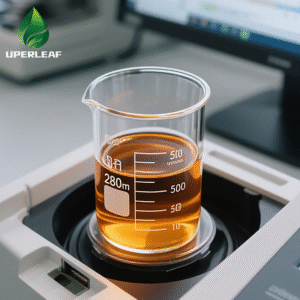
| Appearance: |
Colorless to light blue transparent liquid, with no visible suspended matter (color may vary slightly depending on adjuvant formulations) |
| Density (20℃): |
1.15-1.17 g/cm³ (miscible with water, density close to 1.0 g/cm³ after dilution) |
| pH Range: |
4.5-6.0 (weakly acidic, compatible with most spray systems) |
| Packaging: |
Standard 5L integrated handle plastic bucket, with customized specifications available such as 1L, 20L, 200L, etc. |
| Application: |
Non-cultivated land, orchards, rubber plantations, mulberry fields, tea gardens, etc., for controlling annual and perennial gramineous and broad-leaved weeds (e.g., barnyard grass, reed, cyperus rotundus) |
| Mechanism of Action: |
Systemic herbicide that inhibits the activity of EPSPS enzyme, blocks the synthesis of aromatic amino acids, leading to systemic death of weeds |
| Toxicity Class: |
Low toxicity, with rat oral LD50 > 5600 mg/kg; no irritation on skin contact, mild irritation to eyes |
| Storage Conditions: |
Store in a cool and dry place (temperature ≤ 30℃), avoid direct sunlight, keep away from fire sources and food; shelf life is 2 years |
| Molecular Weight: |
228.18 g/mol (stoichiometric value of glyphosate isopropylamine salt) |
Properties of Active Ingredients
Glyphosate isopropylamine salt significantly improves water solubility through ionization (with a concentration in the formulation reaching up to 41%). The isopropylamine group in its molecular structure enhances the penetration through the plant cuticle, making it more easily absorbed by leaves compared to sodium salt products.
Physicochemical Stability
Thermal storage stability: When stored at 54℃±2℃ for 14 days, the degradation rate of the active ingredient is ≤5%.
Low-temperature stability: When frozen at -5℃±2℃ for 7 days, the volume of precipitates is ≤0.3 mL, and it can return to a uniform state after rewarming.
Dilution stability: No stratification or precipitation occurs after 20-fold dilution, suitable for use in areas with hard water.
Key Application Technical Points
Application timing: The best effect is achieved when weeds are at the 3-6 leaf stage; for perennial weeds, the dosage needs to be increased to 120-200 grams of active ingredient per mu.
Mixing taboos: Avoid mixing with alkaline pesticides (such as Bordeaux mixture); it can be compounded with organosilicon adjuvants (0.05%) to improve spreading performance.
Resistance management: It is recommended to rotate with glufosinate-ammonium, diquat, etc., to delay the development of weed resistance.
Environmental Compatibility
The soil half-life is approximately 3-14 days. It is mainly degraded by microorganisms into harmless aminomethylphosphonic acid (AMPA), with no residual risk to subsequent crops.


Reviews
There are no reviews yet.